
When I went for school visits as part of a need assessment exercise, I thought I would only be ticking boxes by observing infrastructure, teaching practices, and learning resources. But the more time I spent in classrooms, I realized I was carrying more than an observation checklist. I was carrying curiosity, and a willingness to see the stories hidden behind each classroom door. What I discovered were not just challenges, but also small sparks of creativity and hope that made me rethink what a classroom truly means.
A Room That Did It All
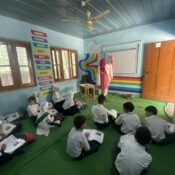
In one school, I entered a room that seemed to hold more than it possibly could. It was a classroom, a mid-day meal kitchen, and a storage space for sacks of grains all at once. Children sat close together on mats, trying to follow the lesson while the smell of cooking drifted in.
At first, I felt disheartened by the lack of dedicated space. But then I noticed the children’s eyes—bright, eager, and full of questions. One boy whispered to me softly, “Ma’am, when will we get a bigger room?” His words stayed with me long after I left, reminding me that child not only sees these gaps, but also dream of better spaces.
Homes Turned Into Schools
Later in the day, I visited a school running from a rented house. A bedroom had been turned into a classroom, sunlight streaming through a single small window. There were no fancy posters, no colorful charts—but there was warmth in the teacher’s voice. She walked from one child to another, patiently guiding, encouraging, and making sure no one was left behind.
When I asked her how she manages, she smiled and said, “Space is small, but I try to make every child feel seen. If they go home happy, then I feel my work is done.” Her words showed me how resourcefulness and commitment can transform even a modest space into a place of learning.
When Children Take Pride
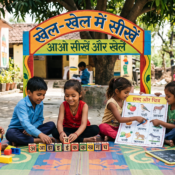
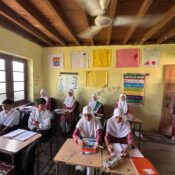
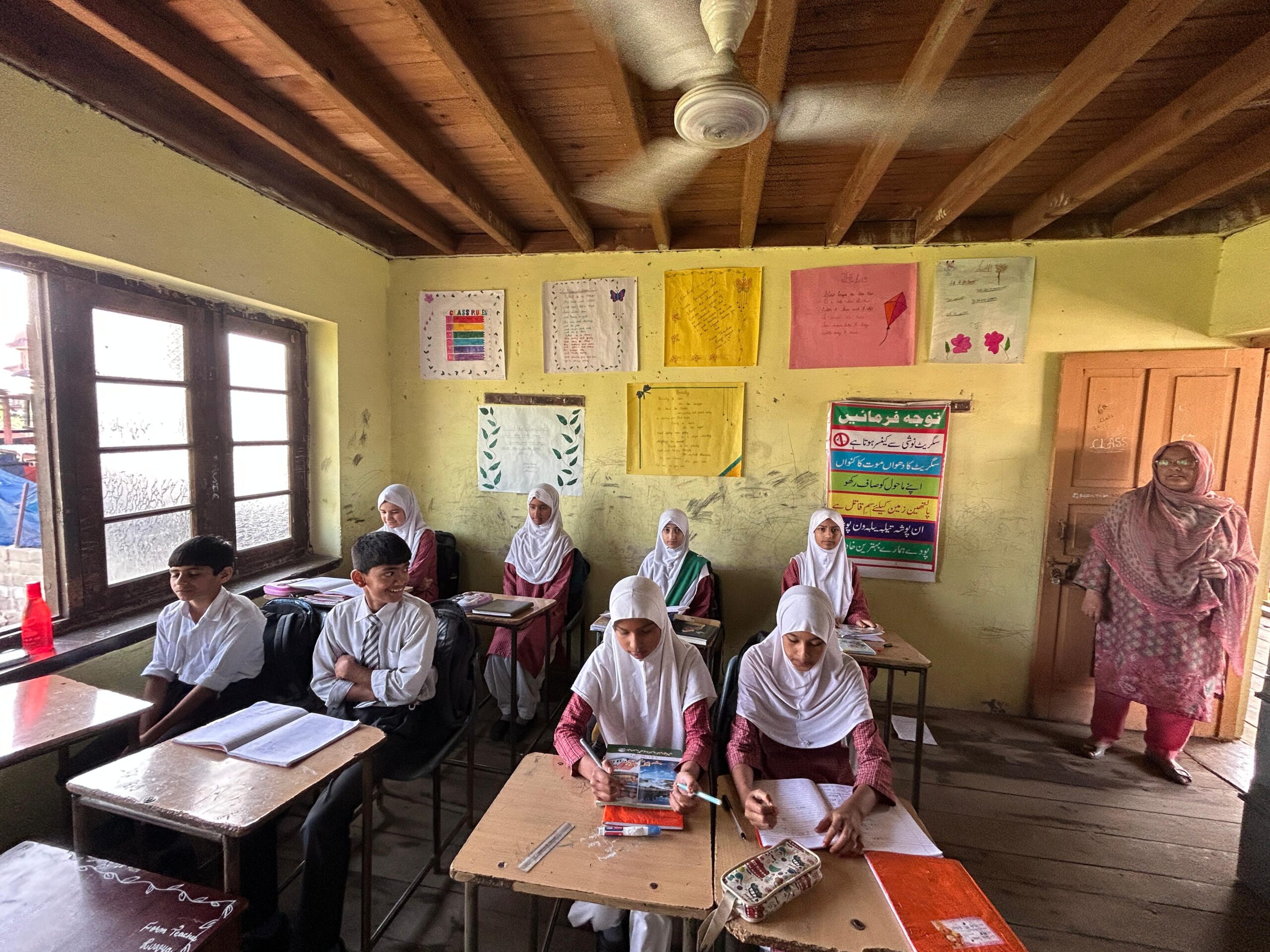
Not every story I saw was about limitations. In some classroom, a wall was covered with children’s artwork. As soon as I entered, a group of children rushed to show me their drawings—sketches of trees, flowers, and families. The pride shining on their faces was unforgettable.
In another corner, the teacher had set up a small reading space with books provided by the government. A few children gathered around, flipping through the pages with curiosity. Their excitement over such a simple setup reminded me how even small efforts can plant seeds of joy and confidence.
Stories of Possibilty
When I think back to those classrooms, I realize that every space I entered told a story of possibility. Some stories spoke of urgent needs bigger rooms, better resources, safer environments where children could learn without fear or constraint. Others spoke of determined teachers finding creative ways to keep children engaged despite limited means, children discovering joy in the smallest of opportunities, their laughter often echoing louder than the challenges around them.
These stories remind us that classrooms are not just physical spaces; they are living, breathing ecosystems where relationships, resilience, and hope intersect. Every chart on a wall, every shared notebook, every teacher’s glance of encouragement contributes to shaping futures in ways both seen and unseen.
My Reflection
That day, I carried two very different feelings with me. On one hand, I had seen the gaps—the absence of proper classrooms, the lack of space, and the need for better facilities. On the other hand, I had seen the strengths—the resilience of children, the creativity of teachers.
It struck me that a school is never just about walls or furniture. It is about the people inside—the children who arrive each morning with bright eyes, the teachers who give their best with whatever they have.
If we only talk about the struggles, we miss the hope. If we only talk about the hope, we ignore the urgent needs. To truly understand schools, we need to listen to both voices.
Because in the end, strong classrooms are not only built with bricks—they are built with care, dignity, and a shared belief that every child deserves a space where they can truly thrive.